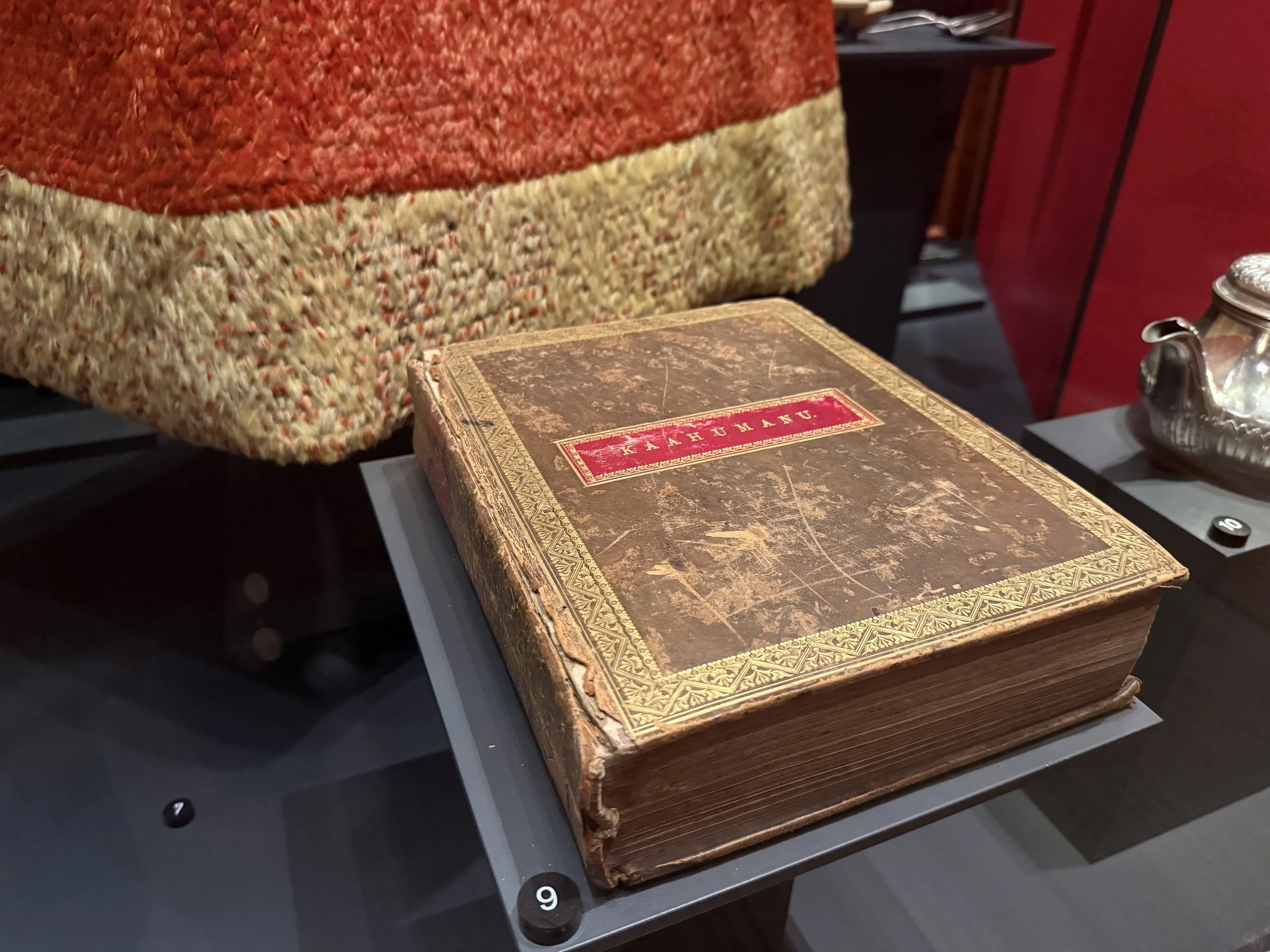
The Queen Ka`ahumanu Bible and the heavy ledger of grace
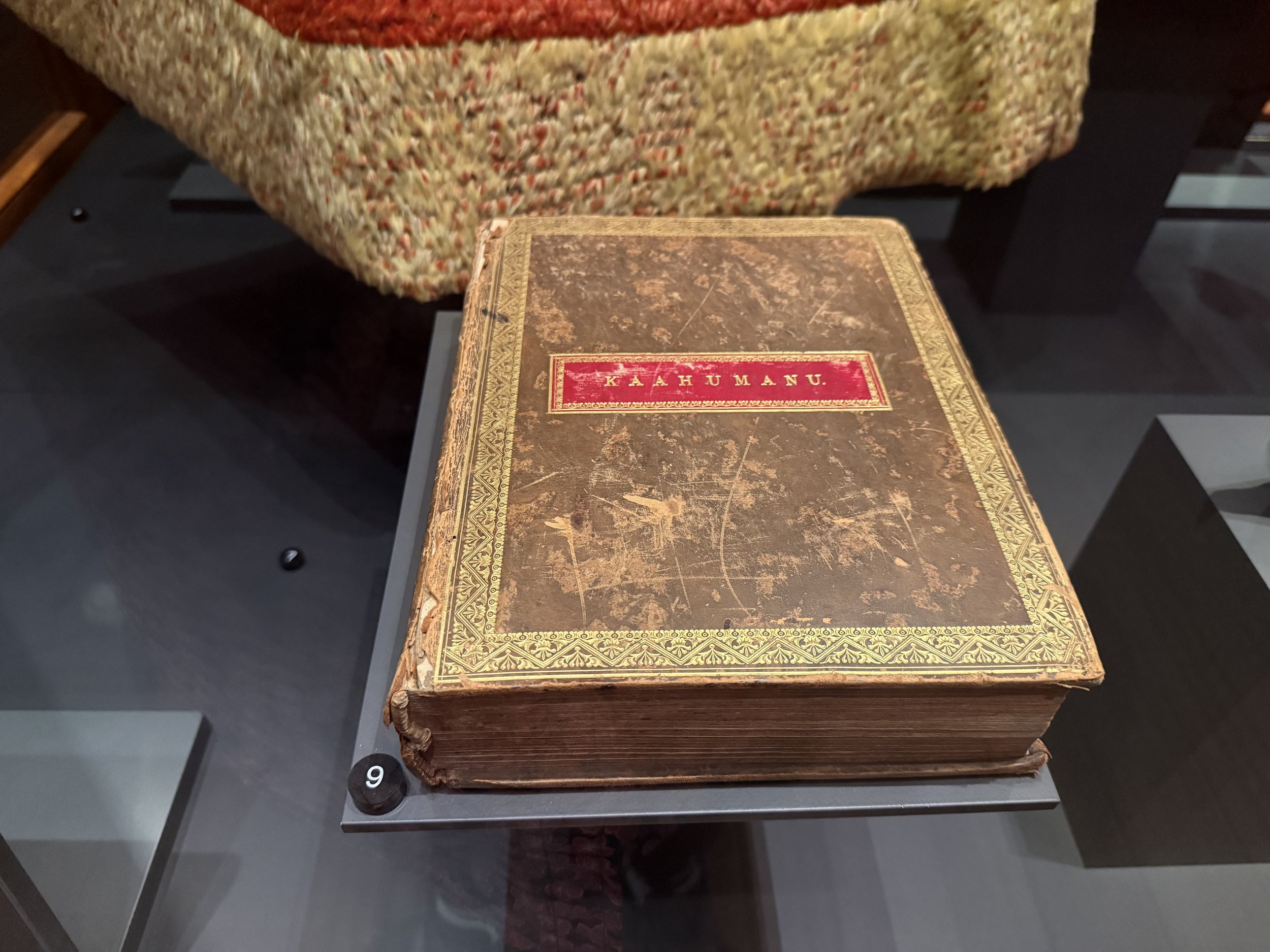
Photo: Gerald Farinas.
Finding a quiet corner at the Bernice Pauahi Bishop Museum in Honolulu always does something to the soul, but my thoughts keep drifting back to a specific artifact tucked behind glass.
It is a heavy, two-volume King James Bible printed in London back in 1817, bearing the name of Queen Ka`ahumanu.
Standing there and looking at those aged pages, my mind as a Presbyterian elder immediately spans the decades, chewing on the deep ties of faith, history, and the legacy we carry in the Presbyterian Church (U.S.A.).
That Bible was brought over by the first wave of American Protestant missionaries who stepped off the brig Thaddeus in 1820. Those early missionaries were sent by the American Board of Commissioners for Foreign Missions, a joint effort of U.S. Congregationalists and Presbyterians. When they arrived, they did not find a blank slate. The ancient kapu system had already been cast aside by Hawaiian royalty, and the islands were standing at a massive spiritual crossroads.
Queen Ka`ahumanu, fierce and brilliant in her statecraft, recognized that learning to read and write the English word was vital for holding her nation together against the encroaching tides of Western imperialism. When she embraced Christianity and threw her enormous political weight behind the faith, she did it with the gravity of a leader who knew the cost of not doing it. She toured the islands urging her people to open their hearts to the Gospel and learn the teachings of the Bible.
Yet, as an elder standing before that sacred artifact, I cannot look at it with blind reverence without reckoning with the heavy, painful ledger of history.
The arrival of that Bible and the men who carried it also marked the beginning of a profound cultural cost. With the best intentions of saving souls, those well-meaning New England missionaries brought a rigid theological lens that viewed traditional Hawaiian culture, hula, mele, and ancient spiritual practices as incompatible with Christian piety.
In their zeal to civilize and convert, they actively dismantled centuries of indigenous knowledge systems, imposing Western modesty, Victorian social structures, and puritanical values onto a people who had long thrived under their own sophisticated environmental and social codes.
That cultural suppression was not a harmless byproduct; it laid the direct groundwork for a creeping political takeover.
The sons and daughters of those very missionaries, alongside other American sugar barons and merchants, embedded themselves deep within the Hawaiian kingdom's economic and political machinery. The literacy and governance structures championed by figures like Ka`ahumanu were eventually weaponized by foreign interests.
The theological worldview that justified saving souls easily bled into a paternalistic ideology that claimed Westerners knew better how to govern the land. That trajectory ended in the tragic, illegal overthrow of the Hawaiian monarchy in 1893, robbing the native people of their sovereignty and forever altering the fabric of the islands.
Looking at her name inscribed on the cover of those sacred pages brings a profound sense of connection, but it is a connection tempered by grief and truth. As an elder and a General Assembly commissioner of the PC(USA), I look at that artifact and see more than just a historical relic. I see the messy, complex intersection of human ambition, faith, and the enduring search for grace.
Those New England missionaries brought their stern Calvinist hymns and their heavy leather-bound Bibles across an ocean, planting seeds that grew into historic congregations right here in the islands, even as those seeds choked out indigenous sovereignty.
Standing before Queen Ka`ahumanu's Bible, you feel the crushing weight of a spiritual heritage that helped shape modern Hawaii, reminding us how the Word of God crossed oceans, and of the devastating earthly price paid along the way.