The ghosts of old Honolulu in my old fashioned ahi poke
Photos: Gerald Farinas.
The salt air of O`ahu hits differently when you’ve spent years navigating the endless hum of Chicago. Coming back home, even for a short stretch, feels like stepping into a half-remembered snapshot.
The familiar ridges of the Ko`olau range still stand sharp against the northern Pacific sky, but the daily rhythm of life carries a strange unfamiliarity. Driving through these streets makes you realize that the Hawai`i I know no longer exists.
The islands have transformed so much that home feels out of reach, overrun by rising glass skyscrapers (a Chicago invention after the Great Fire) poking holes into the skyline.
Some of those very glass towers are owned by Chicago developers. In fact, Chicago’s Brookfield Properties just announced plans to build another massive hotel tower on the southeast corner of its flagship Ala Moana Center, once the largest mall in America.
Down on the asphalt, you watch the still-expanding, multibillion-dollar Skyline elevated train line snaking its way from the far west `Ewa plain right through the Port of Honolulu and onward.
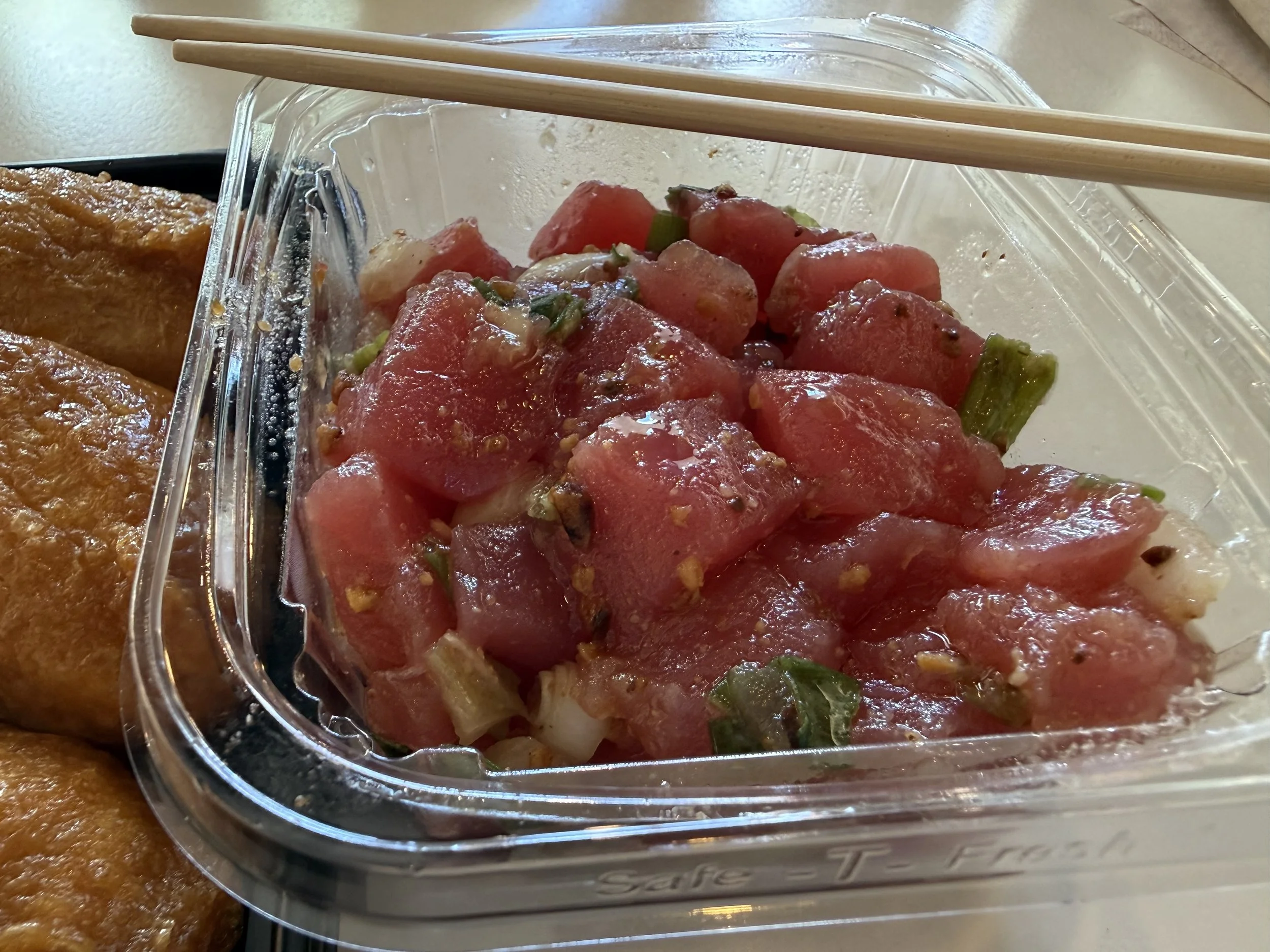
Nowhere is this massive disconnect, through all of it, sharper than over a container of ahi poke.
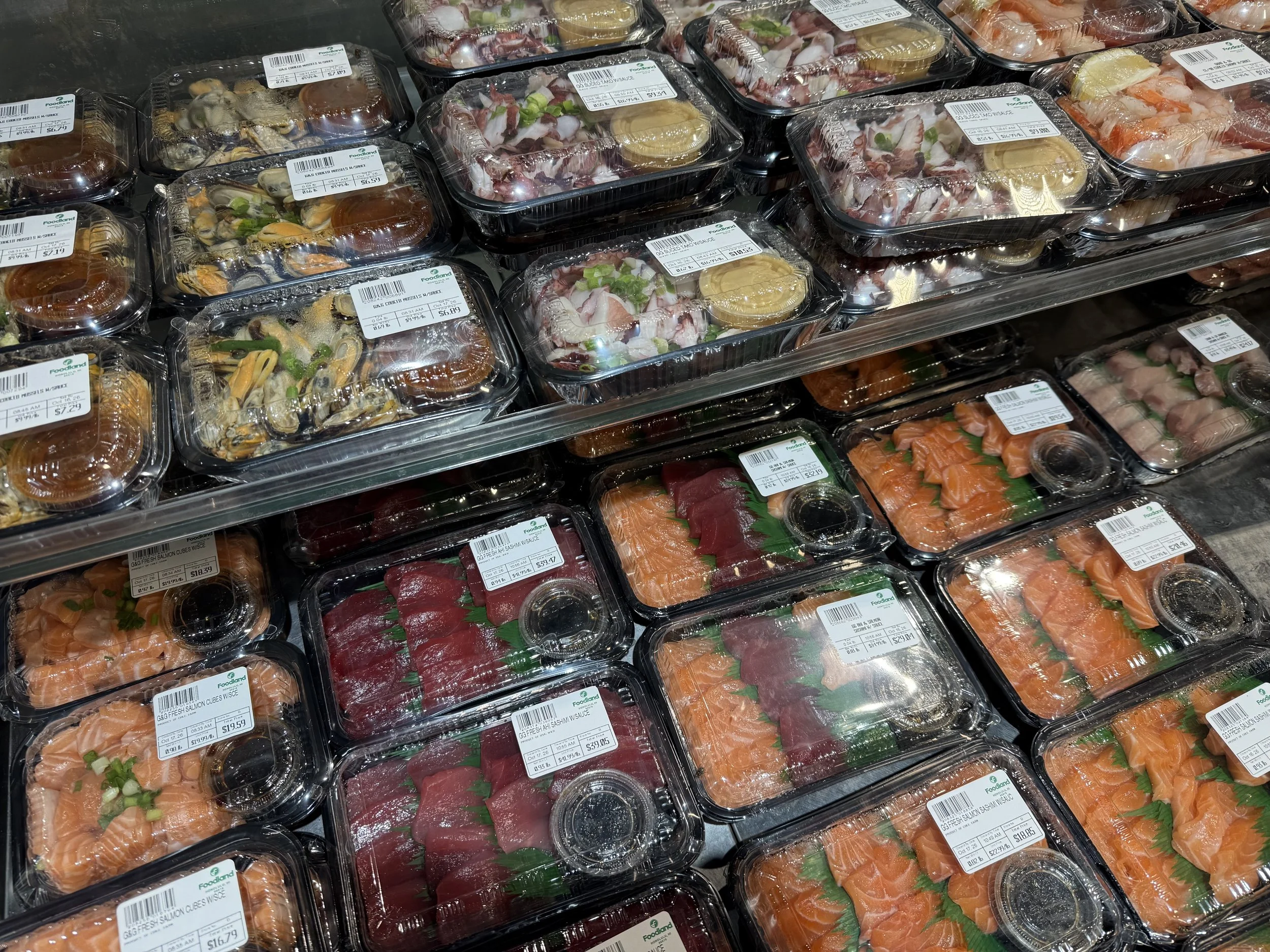
After running errands all morning under a heavy tropical sun, I stopped at Foodland for a Hawaiian original.
Poke has its roots deep in ancient Hawaiiana. For better or for worse, it has become wildly popular across North America and Europe. But its appearance on non-Hawaiian plates and bowls is so foreign to its origins as indigenous fishermen cut up their catch still on the boat, seasoning it with ocean-farmed salt and limu.
There are plenty of purists who turn their faces away in disgust, while other Hawai`i locals embrace the evolution of turning poke into a Pasifika version of a Chipotle or Qdoba bowl.
My friend Wilson joked about my plain Hawaiian ahi poke with koiū, sesamī oil, `aka`akai, and inamona, saying, “Your poke is missing cucumbers, avocados and edamame!”
The reality of that ahi poke cuts deeper than just recipe debates. We are talking about yellowfin tuna that used to be teeming in and around the Hawaiian islands. Now, ahi for poke is rarely from Hawaii. That Foodland ahi comes frozen all the way from Vietnam.
The friction goes way beyond culinary supply chains, too. In recent years, some Hawaiians and Hawai`i locals have led persistent boycotts of mainland chains like Aloha Poke. It hurt even more when the company tried to legally trademark the Aloha name with the federal government.
You don’t even have to ask how Native Hawaiians feel about the very government that literally stole their land at gunpoint having the power to legally hand away Aloha to a non-Hawaiian corporation.
Yet sitting quietly with a simple portion of classic ahi poke brings a momentary return. It proves that amidst all the concrete, the glass towers, the elevated train, and relentless other changes, the soul of the islands still breathes in these small, unpretentious moments of memory before I pack up and head back home to Chicago.