Buddha and Jesus would’ve gotten along
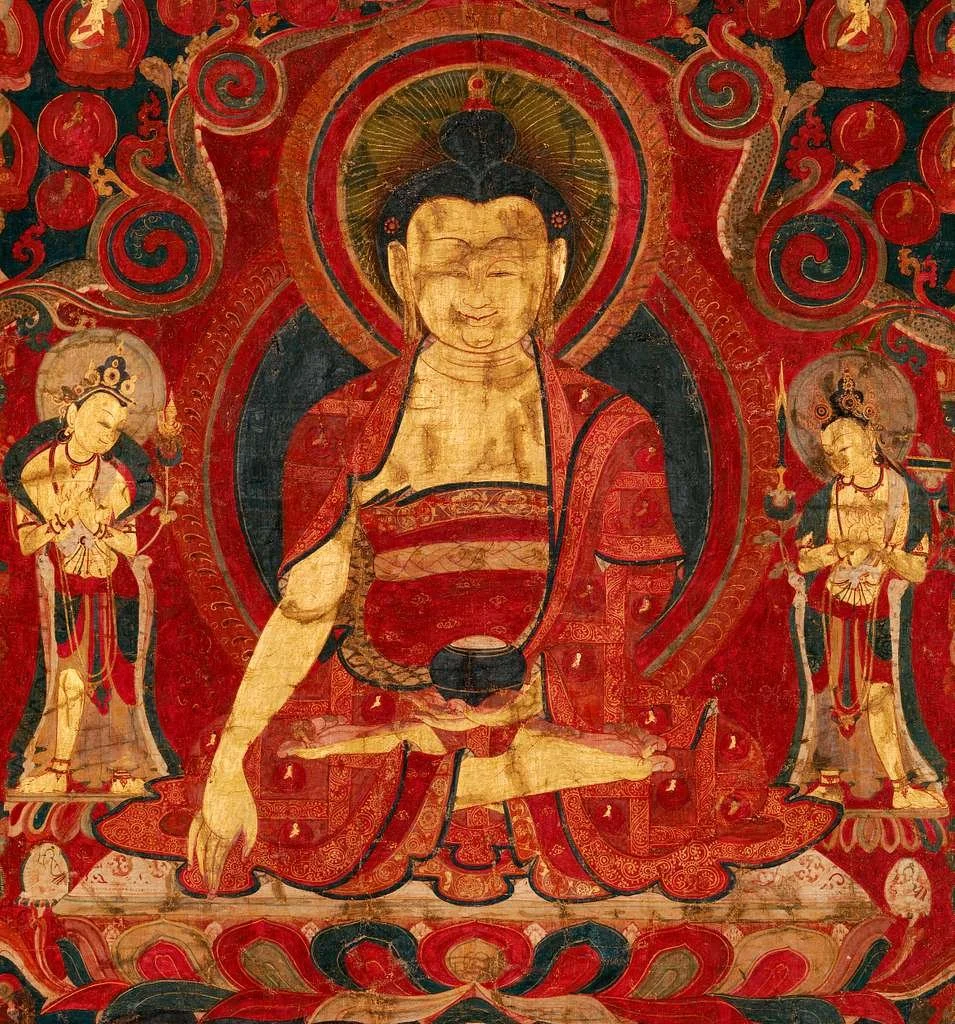
Credit: picryl.com. Public domain.
My perspective on this relationship started early because I grew up with Buddhist neighbors who became some of my best childhood friends.
This personal connection was later shaped by my education under the Jesuits. One of my favorite professors gave me a piece of advice that stayed with me: He told me never to raise a word against Buddhism until I had actually read and understood its Scripture. I took that challenge to heart. After reading those texts, I never found a reason to speak against them.
Another Jesuit priest I knew led worship and regularly included Buddha in the prayers of the Mass, describing our spiritual journey as a walk alongside other great teachers of faith. These experiences opened my eyes to the idea that if Siddhartha Gautama and Jesus of Nazareth ever sat down together, they would likely find they had more in common than the centuries of tradition following them might suggest.
While they lived in different parts of the world and spoke different languages, they were both rebels who looked at the religious systems of their time and saw something missing. They both moved away from fancy rituals and strict rules to focus on something much more personal: the human heart.
Buddha taught that people suffer because they are constantly chasing things that do not last. He believed that if we could train our minds to let go of these cravings, we could find a deep and lasting peace. Jesus spoke about a similar internal shift. He often told his followers that the kingdom of God was not a place they could find on a map, but something living inside of them.
Both men were essentially saying the same thing: The answers to life’s biggest problems are found by looking inward and changing how we think and act, rather than just following a set of religious laws.
However, not everyone sees this harmony. Throughout history and even today, certain Christian circles have directed a great deal of vitriol toward Buddhists. Some critics dismiss it as a hollow philosophy or, in more extreme cases, label it as something dark. They often argue that because Buddhism does not focus on a single Creator God in the same way Christianity does, it is a dangerous distraction from the truth. These groups sometimes view meditation as a way of emptying the mind that leaves a person vulnerable to bad influences.
This kind of hostility usually comes from a place of fear or a lack of understanding. It ignores the fact that both traditions are trying to solve the same problem: how to live a life of meaning and kindness in a world that is often cruel.
This religious friction would likely baffle both Jesus and Buddha, who both spent their lives breaking down the walls of judgment that religious people often build around themselves.
Despite this occasional tension, the actual practice of these values is visible on the roads of America right now. A group of Buddhist monks is currently making headlines with a 2,300-mile Walk for Peace across the United States. They started in Texas and are heading toward Washington, D.C., moving slowly through towns and cities to spread a message of compassion and unity.
The star of this journey is Aloka, a rescue dog often called the peace dog. Aloka was a stray in India who began following the monks during a walk there and never left their side. With a heart-shaped marking on his forehead, he has become a viral symbol of the walk’s mission. Even after recently needing surgery for an injury, Aloka has returned to the trail, walking when he can and resting when he must. His presence serves as a living example of the loyalty and gentle spirit that both Buddha and Jesus admired.
They also shared a very similar view on how we should treat other people. At the time, society was very divided. In India, the caste system decided a person's worth from birth. In Judea, there were strict lines between the clean and the unclean. Both Buddha and Jesus ignored these boundaries. Buddha welcomed people from every social class into his community, and Jesus was famous for spending his time with the poor and the outcasts. Today, it is easy to imagine both of them extending that same radical acceptance to the LGBTQ community, as their entire lives were built on the idea that every person deserves dignity and love.
The most powerful link between them was their focus on compassion. Buddha called for a type of kindness that reaches every living being. Jesus taught his followers to love everyone, even their enemies. These are not just nice suggestions. They are a practical way to stop the cycle of anger and violence that ruins so many lives. Both teachers realized that the only way to truly change the world was to meet hatred with a kindness that refuses to quit.
Even the way they talked to people was alike. They did not use complicated, academic language that only scholars could understand. Instead, they told stories about everyday things like seeds, lost coins or a simple raft crossing a river. They wanted their message to be accessible to everyone, from the wealthiest merchant to the poorest farmer. If they met today, they probably would not spend much time arguing about the different doctrines of the Church or various Buddhist sects. They would likely just recognize a kindred spirit in one another, two people dedicated to helping humanity find a way out of pain and into peace.
For those who want to follow the advice of that Jesuit professor and understand these beliefs for themselves, there are several wonderful books written in plain language.
"Living Buddha, Living Christ" by Thich Nhat Hanh is perhaps the best place to start, as it directly explores the common ground between the two teachers.
Another great resource is "Buddhism Plain and Simple" by Steve Hagen, which strips away the complex cultural history to focus on the core ideas.
For a clear look at the actual teachings, "The Heart of the Buddha's Teaching" by Thich Nhat Hanh or "Buddhism for Beginners" by Thubten Chodron offer answers to the most common questions.
These books make it clear that while our religions may look different on the surface, the pursuit of peace and kindness is a language we all can speak.