Today, the Corporation for Public Broadcasting died
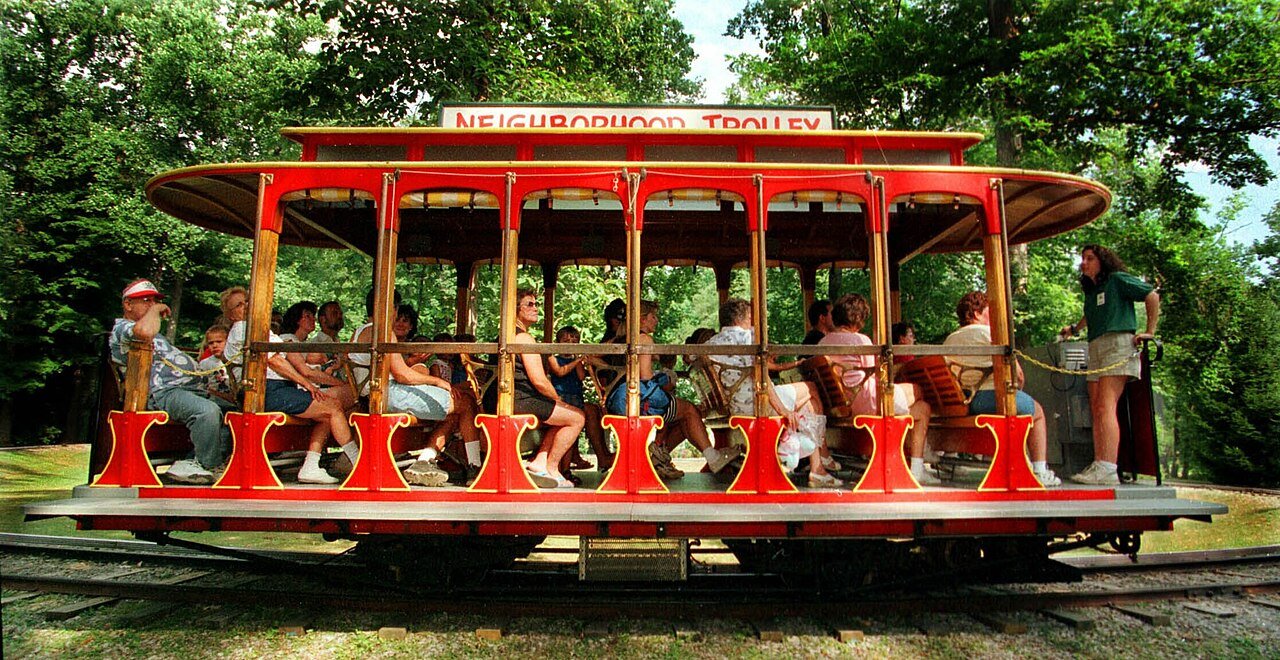
Neighborhood of Make Believe theme park in Idlewild, Pennsylvania. Photo: Ron Shawley via Wikimedia Commons.
Today marks the end of an era that built the foundation of my life. With the official dissolution of the Corporation for Public Broadcasting, a vital piece of the American story is being tucked away into the archives.
This was a pillar of President Lyndon Johnson’s Great Society, a vision that suggested the airwaves belonged to the people and should serve their minds, not just the bottom line of advertisers.
For those of us who grew up in the shadow of that vision, the news feels less like a policy shift and more like the loss of a lifelong mentor.
Despite being born and raised in the United States, English was not my first language. Like so many ethnic Americans, my first steps into this society were guided by a television set that did not demand a subscription fee.
"Sesame Street" and "The Electric Company" were my first classrooms. Before I ever sat at a desk, I was learning the rhythm of English through song and the logic of social interaction through a cast of characters who looked and felt like the neighborhood I saw outside my window. They taught me that the world was big, but that I had a place in it.
The education did not stop at vocabulary. Fred Rogers taught me that my imagination was a source of power and that ethics were not just for textbooks. They were for the way we treat the person next to us.
When I got a little older, "3-2-1 Contact" and "Square One Television" gave me the framework to face math and science without fear. They made the complex feel approachable.
"Reading Rainbow," however, was where I found my calling. Watching LeVar Burton explore the world through the pages of a book convinced me that I could be a writer and a storyteller too.
CPB was not just a success in enriching children's education; it was an equalizer that gave a kid like me the same start as anyone else.
As I moved into adulthood, the work of public media matured right alongside me. PBS and NPR became the steady pulse of my intellectual life. On Saturday nights, I found performances on "Great Performances" that I could never have afforded a ticket to see in person.
On my morning commute, NPR offered deep dives into history and culture that commercial radio, with its frantic pace and constant interruptions, would never dare to touch. They explored the nuance of the American experience, the pain and the triumph of our history, and the beauty of art that exists for art's sake.
[NPR covered LGBTQ history and culture as well as culture and history of Native Hawaiians, Filipino Americans, recent immigrants, when commercial news didn’t cover these topics.]
We are watching the disassembly of a system that believed in the intrinsic value of an informed and inspired citizenry. While commercial programming often settles for what is profitable, public broadcasting dared to provide what was necessary.
The Corporation for Public Broadcasting was a bridge between where I started and where I am today, and seeing that bridge dismantled feels like a betrayal of the promise that any child, regardless of their first language or their family’s income, deserves a window to the world.