Hopeless: About my sermon on Sunday
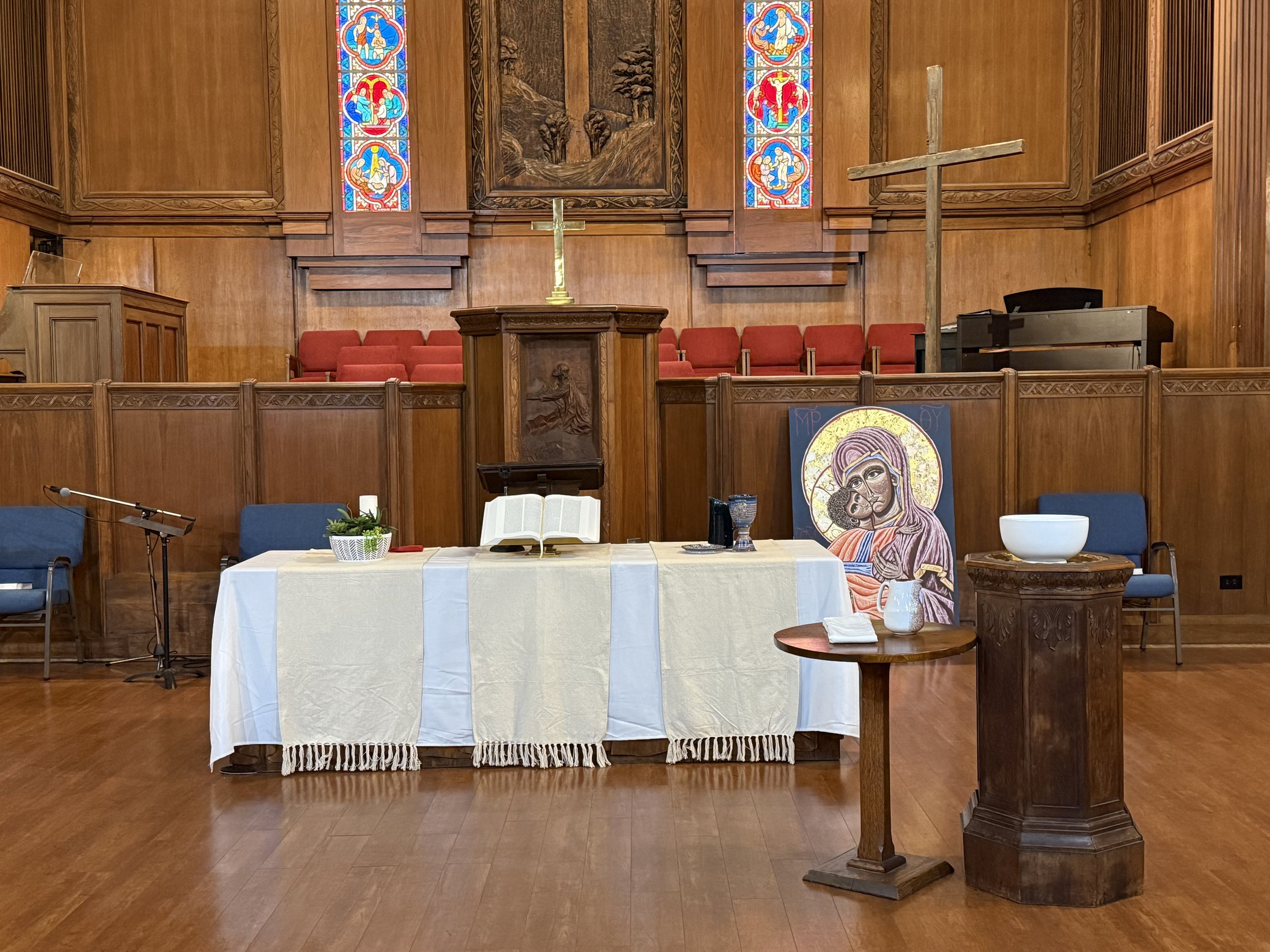
Edgewater Presbyterian Church. Photo: Gerald Farinas.
The weight of the pulpit has never felt heavier than it did this past Sunday at Edgewater Presbyterian Church. As a preaching elder, I know my task is usually to offer a word of encouragement, but my own heart was just as burdened as the people sitting in the chairs.
For a long time, my instinct has been to push hope as a shield against the world. But there comes a point where the gap between a hopeful sermon and a painful reality is just too wide. When the news is full of ICE and CBP raids, the shooting of a mother in Minnesota, and the constant talk of war, telling my congregation to just stay hopeful feels like I am dismissing their pain.
The hopelessness people are feeling right now is not an abstract idea. It is a lived reality for the PCUSA and our neighbors. I see people watching their friends live in fear of being taken away while their own bank accounts run dry. Because of tariff policies, I know families in our community are being forced to choose between buying medicine or buying food. To stand up and preach about hope while people are being crushed by these systems is a lot to ask of myself and of them. I worry that if I push hope too hard, it makes it sound like their suffering would stop if they just had more faith, and I know that is not true.
After saving my first draft and opening a new Microsoft Word document to start fresh, I decided to change the whole message. I chose to veer away from the pressure of hope and focus instead on what it means to be a parish model of Church.
I found myself thinking of a story told by Barbara Brown Taylor about a woman who asked her priest what she could do to be active in her parish. The priest didn't give her a committee assignment or a volunteer schedule. He simply told her to sit on the porch of her house every day and watch the people.
As a preaching elder, this story shifted how I viewed my role. The parish model suggests that our responsibility is not to fix the world from the pulpit, but to be present in the place where we have been planted. When I look out from the porch of Edgewater Presbyterian Church, I see a neighborhood under siege.
I see the shadow of ICE and CBP agents and the empty chairs left by those who have been taken. I see the stress on the faces of parents who are calculating the cost of eggs and insulin because of tariff policies.
Sitting on the porch means I cannot look away from the reality of a mother killed by agents or the looming threat of war.
This approach changed how I handled the Gospel text about the Lamb of God. In an initial draft, I tried to tackle what it means to value sacrifice in the Christian life. But in a parish model, sacrifice isn't about asking people to give up even more of their dwindling resources. How can I ask people to value sacrifice when they have already sacrificed so much? The people at Edgewater have already given up their sense of safety and their financial security.
Instead, sacrifice is about the Church being willing to sacrifice its own comfort to truly see the community. If I am sitting on that porch, I am not there to shout platitudes or forced hope at the people walking by. I am there to witness.
The hopelessness I feel, and that I know our congregation feels, is the natural result of actually watching the people. To be a parish church right now is to be a place where it is okay to be overwhelmed.
By shifting away from a message of forced hope, I wanted to tell the people at Edgewater that their observation of the world is correct. The raids are terrifying, the financial hardship is unjust, and the sabre-rattling is dangerous. If our only response is to demand hope, we aren't sitting on the porch; we are hiding behind the front door.
I realized that being a preaching elder in this moment means being the one who sits on the porch and refuses to look away. Sometimes, the most faithful thing I can do is admit that the darkness is real. We are a Church that belongs to a specific street and a specific group of people who are suffering.
It is an act of solidarity to sit in that hopelessness with my congregation rather than trying to fix it with easy answers. I don't need to manufacture a silver lining to be faithful. I just need to stay on the porch, see the people, and let them know they are not being watched by a judge, but by a neighbor who sees their sacrifice and shares their burden.