A Lei Story: An intentional craft pushes against the tide of colonial capitalism
Photos: Gerald Farinas.
Coming home to Honolulu after living out in Chicago for a quarter century makes you notice things you used to just take for granted.
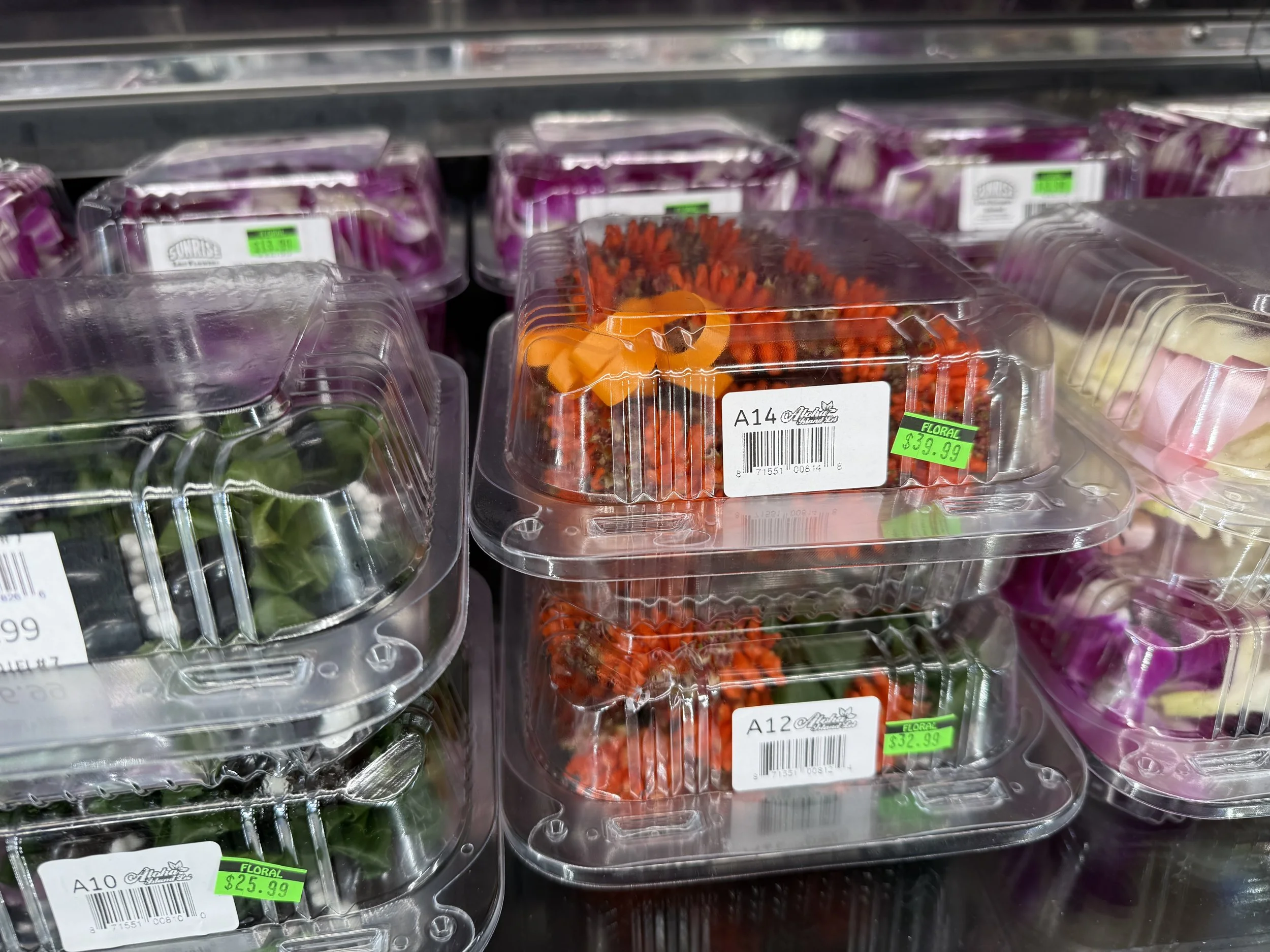
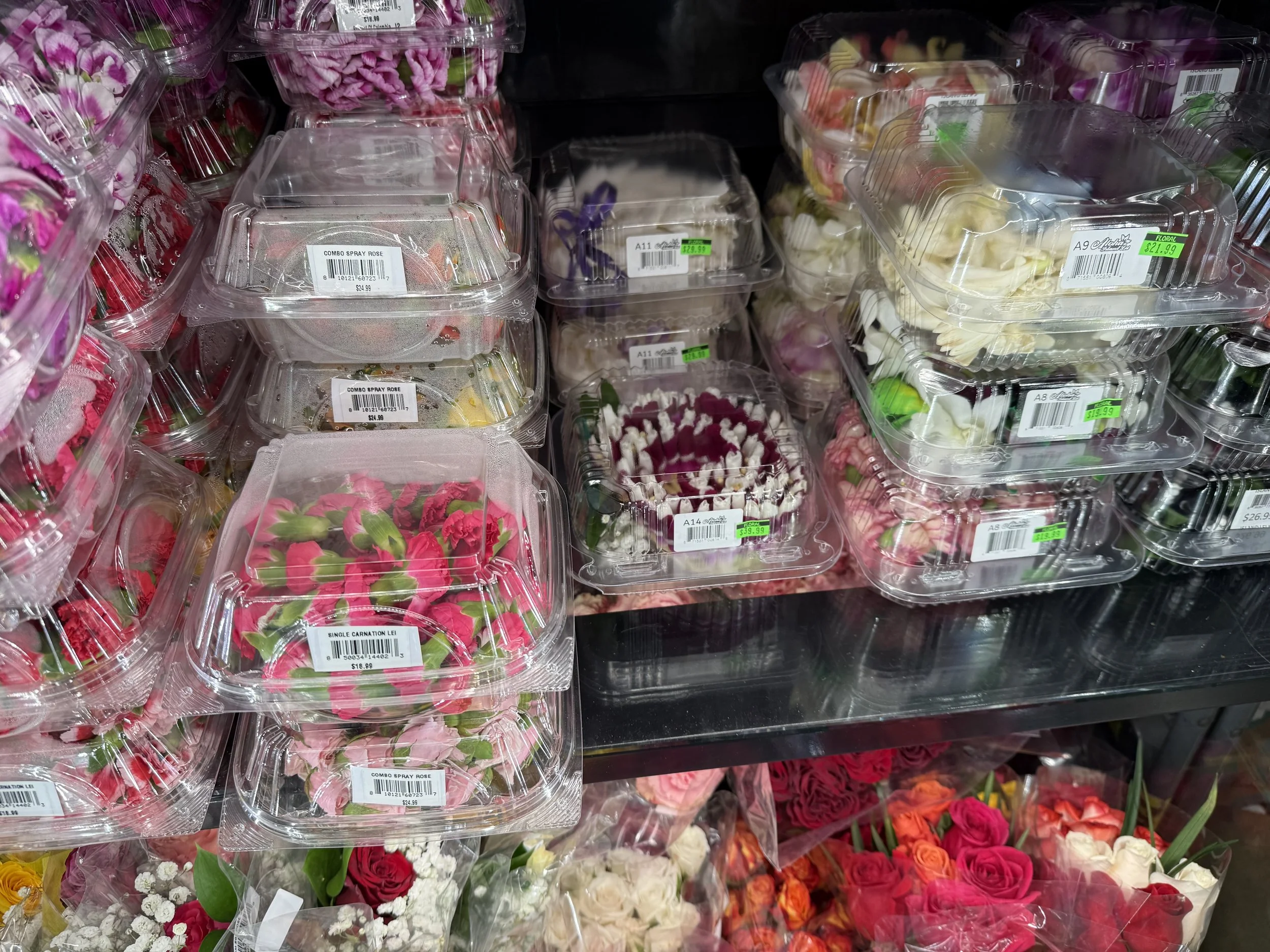
I’ve been back on the island for two weeks now, cruising around and catching up, but one thing has really been pissing me off: seeing the price tags on mass-market lei.
Forty bucks for a basic imported strand at Foodland Farms? Come on!
Back when I was growing up here, running around Kalihi before we moved out to Salt Lake, most lei weren’t luxury items you had to take out a small loan for.
Think back to all the milestones that marked life here. Birthdays, religious events, walking across that stage at Moanalua High School to get my diploma. They all came with the sweet scent of pikake (jasmine), pua melia (plumeria), or kupaloke (tuberose). Those weren't just store-bought novelties picked up on a whim, for the most part.
The custom itself goes way back to early Polynesian voyagers who navigated thousands of miles across the ocean from Tahiti and other parts of the Pacific, bringing their seeds, plants, and traditions with them when they settled these islands.
In ancient times, a lei carried profound spiritual and social weight: they served as indicators of royal rank like lei hulu bird feather strands, sacred offerings laid at temples, and symbols of peace, like the green maile vine used to bind agreements between chiefs.
Here’s what I value most of the tradition: They were crafted with actual intention.
Somebody spent hours sitting there, stringing, wrapping, or weaving, putting their time, care, and mana into it. Gifting one meant you were handing over a piece of yourself and a direct connection to the `āina.
As the decades rolled on, the custom shifted from a strict marker of class and religion into a universal symbol of island hospitality. In the early days of steamships, legendary Matson Navigation Company passenger liners arriving at the Aloha Tower and the Port of Honolulu were greeted by crowds, with passengers on deck and welcoming parties onshore showering each other with cascades of fragrant lei.
Those travelers were then whisked away to Matson's earliest iconic properties, like the historic Moana Hotel and fabled Royal Hawaiian Hotel, where they were greeted with even more lei upon arrival.
When Pan Am started flying its iconic jazz age clipper service to the islands, that welcoming tradition took to the skies, cementing the custom as a global symbol of the aloha spirit.
Yet, even with all the mass production, there are still bright strands, pardon the pun, of indigenous and local-born Hawai`i folks who refuse to let the real art form die out. Cultural practitioners and dedicated artisans across the islands still practice lei making with fierce, beautiful intentionality, foraging responsibly, growing their own material, and passing down ancient weaving techniques.
As local journalists like Ku`uwehi Hiraishi, Paula Akana, Dillon Ancheta, and other dedicated feature reporters have documented through years of wonderful storytelling, these modern-day masters keep the heartbeat of the practice alive against the tide of commercialization.
Now, when you see a master artisan charging a steep price for an authentic, meticulously crafted, locally sourced piece, that is entirely fair. They’re being paid what their grueling hours, rare materials, and sacred generational knowledge are genuinely worth.
The real thorn is seeing that high price tag slapped onto mass-produced imports. Most of the stuff you see on standard supermarket racks isn't even local anymore;m. The most popular lei, the purple orchid `okika, is mass-produced and flown in from Thailand. Many of the brighter floral garlands are flown from Central and South America in the bellies of freighter 767s.
I feel like we’ve lost that real, tangible connection to the land and our own backyard flora, swapping local roots for a global supply chain. Sure, wild harvesting of native plants like maile and palapalai ferns has recently faced three-year restrictions by hula halau and forest conservationists to protect vulnerable ecosystems from over-harvesting and diseases like Rapid ʻŌhiʻa Death, but the commercial shift runs deep.
When a generic, factory-farmed strand costs forty bucks, it stops being this pure, open-handed expression of welcome and turns into an exclusive commodity.
It makes everyday folks think twice about participating in a custom that was always meant to be shared freely, even if the high cost in stores is driven by intense retail overhead and global logistics.
Worst of all, it completely blurs the line between cheap convenience and true human labor.
When everything gets processed and commercialized like this, we risk losing the intentionality behind it all, that quiet conversation between the maker, the giver, and the person receiving it.
It's great to be back home where the air feels right (or maybe not with 70-97% humidity this past week) and the food hits the spot (Zippy’s got a lot of my money), but seeing what’s happened to the humble lei just feels like we traded something irreplaceable for convenience.
As a liturgist, I often write laments. I just had to write this one:
We grieve for the wild forests quieted of their harvest, for the fragrant breaths of native valleys choked out by corporate supply chains, and for the sacred art of giving stripped down to a sterile barcode. Yet beneath the relentless machinery of colonial capitalism, the true heartbeat of the islands refuses to be boxed up or flown in. All honor to the hands that still gather with reverence, that still weave living prayer into every bloom and leaf, keeping the old fires burning and proving that the spirit of aloha can never truly be priced out.
Ke kanikau nei kākou i nā ulu lāʻau hihiu i hoʻomāmā ʻia i ko lākou ʻohi ʻana, no nā hanu ʻala o nā awāwa maoli i hoʻopaʻa ʻia e nā kaulahao lako koropore, a no ka hana haipule o ka hāʻawi ʻana i hōʻino ʻia a lilo i pākuʻi kiko maʻemaʻe ʻole. Eia naʻe ma lalo o ka mīkini luhi ʻole o ka hoʻomalu koloniala, hōʻole ka puʻuwai ʻoiaʻiʻo o nā mokupuni i ka hoʻopaʻa ʻia ʻana i pahu a i ʻole ke lawe ʻia mai ma ka mokulele. E hoʻohanohano ʻia nā lima e ʻohi mau nei me ka haipule, e ulana mau nei i ka pule ola i kēlā me kēia pua a me ka lau, e mālama mau ana i ke ahi kahiko a e hōʻike ana ʻaʻole e loaʻa ke kumu kūʻai o ka ʻuhane aloha i nā mea a pau.