Hot Oil, Cold Chicken, Kalihi Memories: Hawaii-style cold ginger chicken

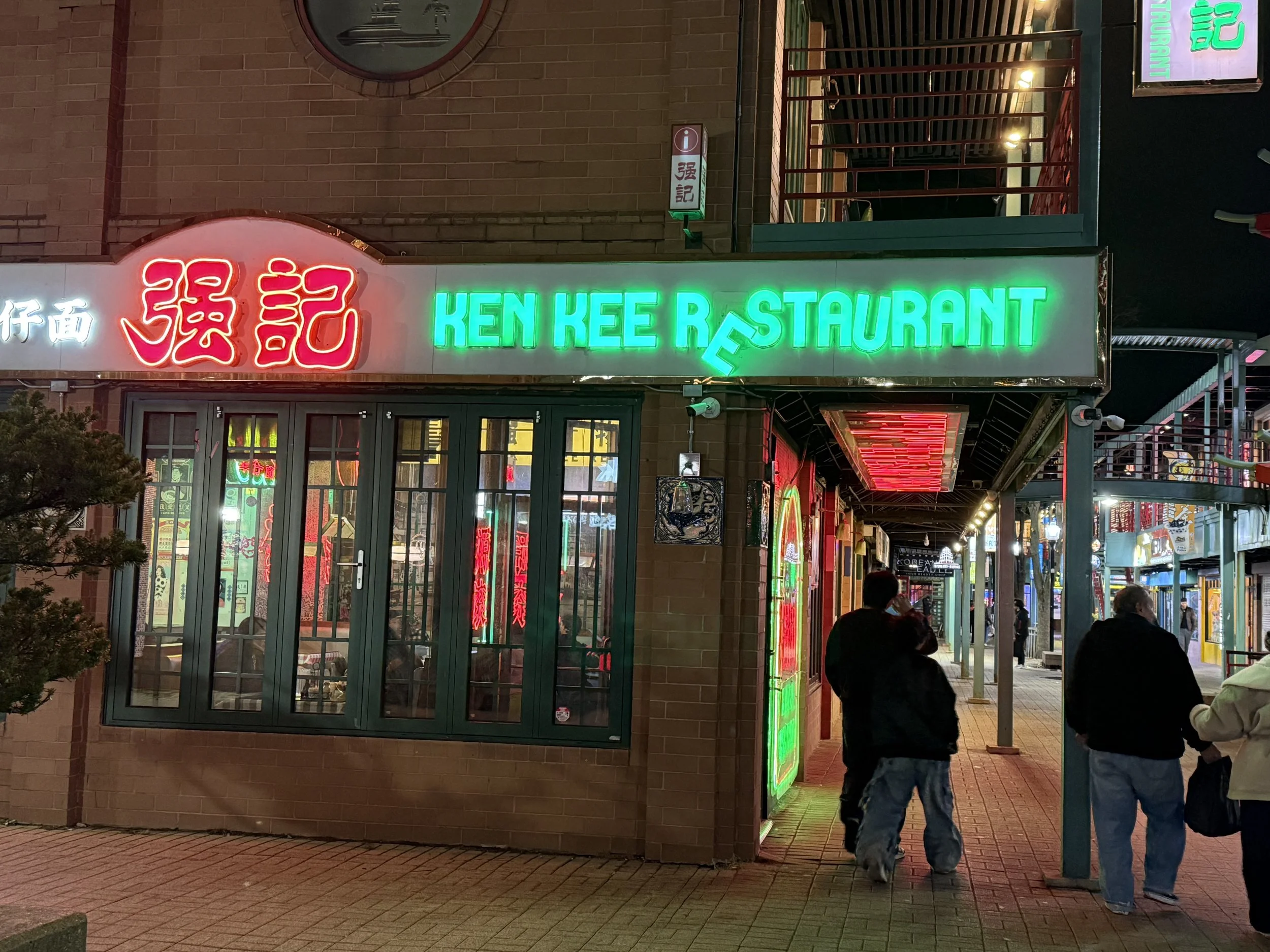
Cold ginger chicken at Ken Kee Restaurant in Chinatown Chicago. Photo: Gerald Farinas.
If I close my eyes and think back to dinner time in Honolulu in the 1980s, the sensory details hit me first. The humidity sticking my shirt to my back, the sound of geckoes chirping outside the screen door, and the distinct, comforting smell of my dad walking in with white cardboard takeout boxes.
Growing up, our dinner table was a rotation of local staples, but few things elicit the specific nostalgia that cold ginger chicken does. It was not flash. It was comfort in its purest, palest form.
Back then, in the 80s, we lived in Kalihi. My dad knew all the spots. On nights when mom did not cook because she was taking night classes at Kapiolani Community College or working the graveyard shift at the Moana Hotel, he would swing by the legendary Tasty Chop Suey. It was the kind of old school Chinese restaurant that felt like it had been there forever, loud and bustling, where the roast ducks hung glistening in the window.
Later, around 1991, we moved out to the Salt Lake-Moanalua area. The neighborhood changed, but the menu did not. Our new go to became Loong Hwa. It did not matter which kitchen it came from because the ritual was always the same. We would open the box to reveal neat rows of pale, bone-in chicken looking deceptively plain.
But for me as a kid, the main event was not just eating it. It was the process of dressing it.
I remember being fascinated by the mechanics of it. I would watch as they prepared the sauce. It was a massive mound of finely minced fresh ginger and bright green onions sitting in a metal bowl. Then came the magic. Someone would take a ladle of smoking hot vegetable oil and pour it directly onto the raw aromatics.
The sound was incredible, followed immediately by an eruption of fragrance that filled the entire room. It was savory, pungent, and sharp. That vibrating, intense green sludge was then spooned generously over the cool chicken. That contrast of the fiery hot oil hitting the cold aromatics, all served over chilled meat, was everything.
It is actually a flavor profile that runs deep in my family. My cousins are from Singapore, so I was lucky enough to grow up with the famous relative to this dish as a tot. That would be Hainanese chicken rice.
While the Hawaii version I grew up with is usually eaten with plain sticky rice or fried rice, the Singaporean version pairs the poached bird with rice cooked in chicken fat and aromatics.
Both dishes rely on that delicate, poached texture, but there is something about the sheer volume of ginger and oil on the Hawaii version that speaks to my childhood soul.
Now that I am living out here in the Midwest, between Chicago and Wisconsin, that memory feels further away than ever. You cannot find good cold ginger chicken here easily. Trust me because I have tried.
When I try to describe it to my Midwestern friends, I am usually met with blank stares or outright skepticism.
"Wait, it is served cold? Like leftovers?"
Well, yes. But also, no.
Trying to explain the appeal of boiled, skin-on chicken to someone raised on fried cheese curds or deep dish pizza is a losing battle.
My friend Josh, bless his heart, visibly recoils when I order anything resembling poached chicken at the few authentic Chinese spots in Chicago. He cannot get past the smell of plain, boiled poultry, or the sight of that gelatinous, pale skin. To the uninitiated Midwestern palate, it just looks undercooked. Or worse, bland.
But they do not get it. They did not grow up in the Oahu humidity where a hot roast chicken was the last thing you wanted. They do not know the history.
I have had to do my own digging to explain it to them. What we ate in Hawaii is a local adaptation of the classic Cantonese dish, White Cut Chicken or Bai Qie Ji. The Chinese immigrants who came to Hawaii to work the sugarcane plantations—like my great grandfather and grandfather did—brought the technique of gently poaching a bird to highlight its natural flavor.
The Hawaii twist is the temperature. In the islands, after poaching, that chicken gets plunged immediately into an ice bath. That shock stops the cooking dead and tightens up the skin, giving it that specific, slippery texture that locals love and my friend Josh hates.
It transformed a hot meal into a refreshing, cooling staple perfect for plate lunches.
Fortunately, I have found one sanctuary in Chicago that gets it right. Ken Kee Restaurant in Chinatown is my go to spot when the craving hits.
They understand the texture. They understand the temperature. And most importantly, they understand that the ginger scallion oil needs to be abundant.
However, Chinatown is a trek if you are out in the suburbs or up in Wisconsin. Sometimes you just have to make it yourself.
The good news is that you do not need an Asian market to pull this off. You can get everything you need at Mariano or the Jewels.
How to make Hawaii style cold ginger chicken in the Midwest
This recipe uses chicken thighs because they are forgiving and flavorful. You must keep the skin on. If you take the skin off, you lose the jelly like texture that makes this dish what it is.
Ingredients
• 4 to 6 Chicken Thighs (Bone-in and Skin-on. Do not get boneless.)
• 1 large hand of fresh Ginger (Look for smooth skin, not wrinkly.)
• 2 bunches of Green Onions (Scallions)
• Vegetable Oil or Canola Oil (You need a neutral oil with a high smoke point.)
• Kosher Salt
• Water
Step-by-step
1. Prep the aromatics: Smash a roughly 2 inch knob of ginger with the flat side of your knife. Cut two stalks of green onion into long segments.
2. The boil: Fill a pot with enough water to submerge the chicken thighs completely. Add the smashed ginger, the green onion segments, and a heavy tablespoon of salt. Bring the water to a rolling boil.
3. The plunge: Once boiling, carefully drop the chicken thighs in. Let the water come back up to a boil. Once it hits a boil again, turn the heat down to the lowest setting, cover the pot with a lid, and let it simmer gently for about 20 minutes. You do not want a violent boil or the meat will get tough.
4. The shock: While the chicken simmers, prepare a large bowl with cold water and lots of ice. This is the most important step for the texture.
5. Cooling: Check the chicken is cooked through (internal temp of 165°F). Remove the chicken from the pot and immediately plunge it into the ice bath. Leave it there until the chicken is completely cold.
6. The sauce: While the chicken cools, make the magic sauce.
• Peel and finely grate or mince about 3 to 4 tablespoons of ginger.
• Finely mince the rest of your green onions (white and green parts).
• Put the ginger and onions in a heat proof bowl (ceramic or glass, not plastic).
• Mix in about 1 to 1.5 teaspoons of salt. It should taste salty.
• Heat about 1/3 cup of vegetable oil in a small pan until it is shimmering and just starting to smoke.
• Pour the hot oil carefully over the ginger and onions. It will sizzle aggressively. Stir it up.
7. Serve: Pat the cold chicken dry with paper towels. You can chop it through the bone with a cleaver if you are brave, or just leave the thighs whole. Spoon the ginger scallion oil generously over the top. Serve with hot white rice.