Book Review: ‘Demon Copperhead’ taught me about addiction, division, grace
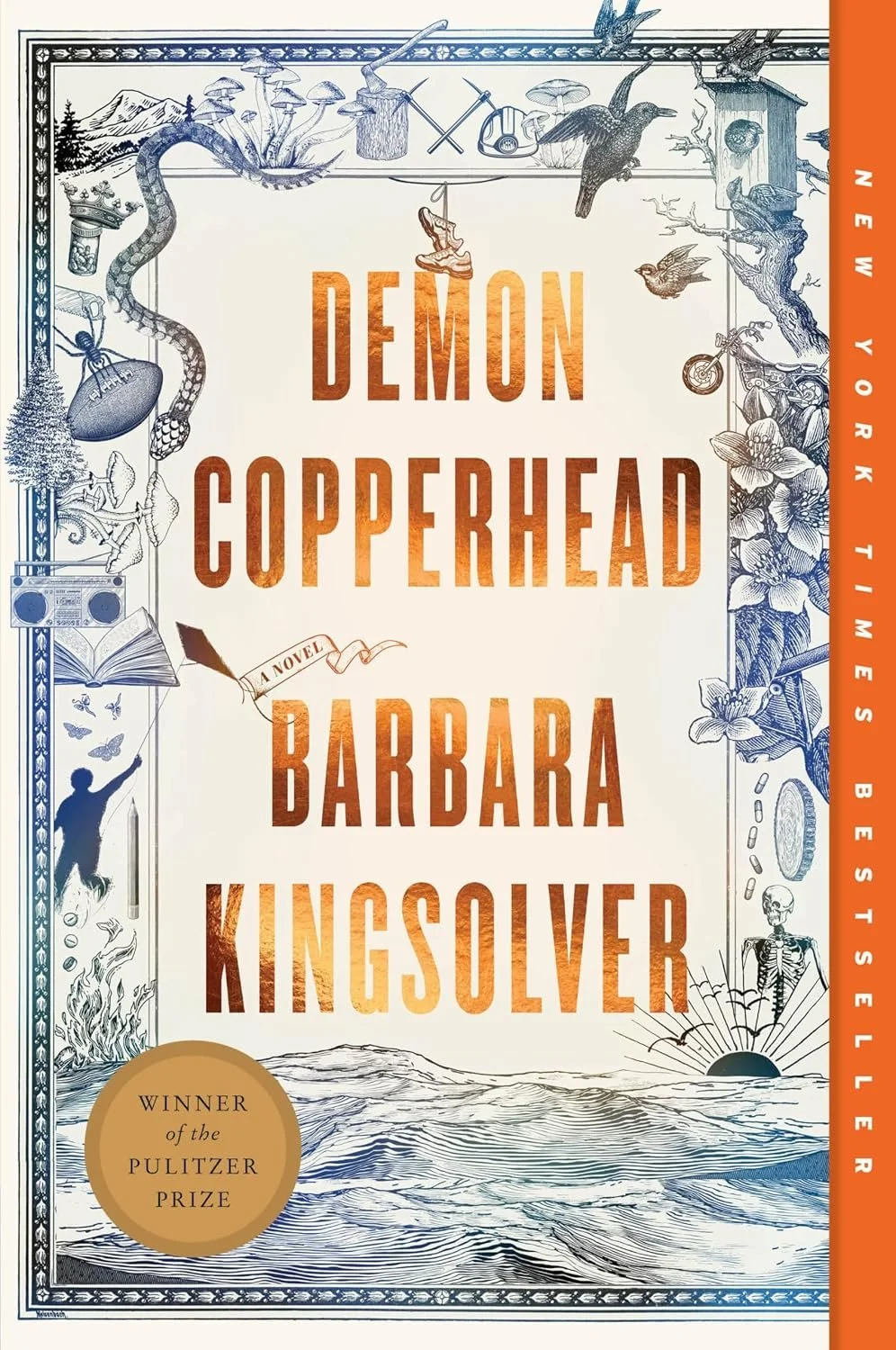
"Demon Copperhead" caught me entirely off guard. Coming into Barbara Kingsolver’s novel, I will admit I had very little real understanding of the deep, systemic roots of the opioid epidemic facing our nation today. I knew the headlines, of course, but I did not truly grasp how an entire region could be systematically targeted, hook, line, and sinker, by predatory pharmaceutical companies and a system that simply did not care.
The novel lays out with devastating clarity how corporate greed and the raw power of the pharmaceutical industry in America did not just accidentally trigger this crisis. They actively designed it. Big Pharma looked at communities filled with physical laborers, people with broken backs and worn-out joints from working coal mines, tobacco fields, and timber yards, and saw a gold mine. They flooded these towns with millions of pills, lied about how addictive they were, and pushed doctors with bonuses and perks to keep prescribing more. The epidemic was not a tragic miscalculation. It was engineered from the top down. Turning vulnerable, hardworking human beings into lifelong, dependent customers was part of the profit plan all along.
This is actually not my first Barbara Kingsolver novel. I have to thank my high school AP English teacher, Dr. Cristina Rathyen of Moanalua High School in Honolulu, for introducing us to Kingsolver years ago through "Pigs in Heaven" and "The Bean Trees." Dr. Rathyen opened the door to Kingsolver’s incredible storytelling for me back then, but reading this latest work felt like a whole new education.
Beyond the staggering arc of addiction, the book opened my eyes to pieces of American history and culture I had never fully appreciated. Learning about the Melungeons in Appalachia, alongside the complex and often painful history behind the "hillbilly" and "redneck" stereotypes, reframed how I view the dignity and resilience of rural communities.
The story also captures the intense, almost religious pull of small-town Friday Night Lights culture, where high school football carries the weight of an entire community’s hope and identity. Woven through that world were characters who grounded the narrative in surprising ways. There is Maggot, the young LGBTQ character who gets swept right up into the chaos and tragedy of the crisis. Then there is an older, likely LGBTQ character who serves as a surprising bedrock of stability, proving that refuge often appears in the most unexpected places.
What also struck me deeply was how the book touches on the grim realities of homegrown human trafficking and domestic violence. Kingsolver shows how these dark forces operate in both rural hollows and big city contexts alike. Crucially, the novel lays bare that these atrocities are not somehow foreign or distant issues; they are carried out right here at home by white folks against their own, feeding off the vulnerability, addiction, and poverty of young people who have nowhere else to turn.
I think every single person who is curious about just how bad the opioid epidemic is in this country needs to read this book. It shows the human cost in a way that news reports never can. More than that, it forces us to break down our comfortable use of epithets like "hillbilly" and "redneck," and to stop looking down on what people call "white trash" culture.
That kind of looking down is not accidental. The higher-ups in charge of this country, along with the huge corporations making billions off our pain, want us to keep using those labels. They profit when we look down on each other. As long as we are divided and busy judging people in rural America or looking down on poor communities, we do not look up at the people who actually created the crisis. Division keeps us angry at the wrong people, and division keeps them making money.
As an older adult who ministers to folks living in sober-living communities right here in my own Chicago neighborhood, this book hit exceptionally close to home. It gave me a profound, heartbreaking glimpse into what the people I serve may have endured in their own addiction stories. It laid bare just how much messier, heavier, and more complicated recovery is than an outsider can ever realize.
It also forced a moment of real personal reckoning. I realized I need to pause and get off my damned soapbox about them quitting smoking. When someone is fighting with every ounce of their soul not to go back to the drugs that nearly destroyed them, that cigarette might be the one fragile boundary keeping everything else from falling apart. Judgment has no place where survival is being fought for day by day.
By the time I reached the final pages, the weight of the journey caught up with me, and I cried. "Demon Copperhead" is not just a story about survival; it is a masterclass in empathy, history, and the quiet grace required to truly walk alongside people in their healing.