
Archiving: What’s with all the fancy paper and boxes?
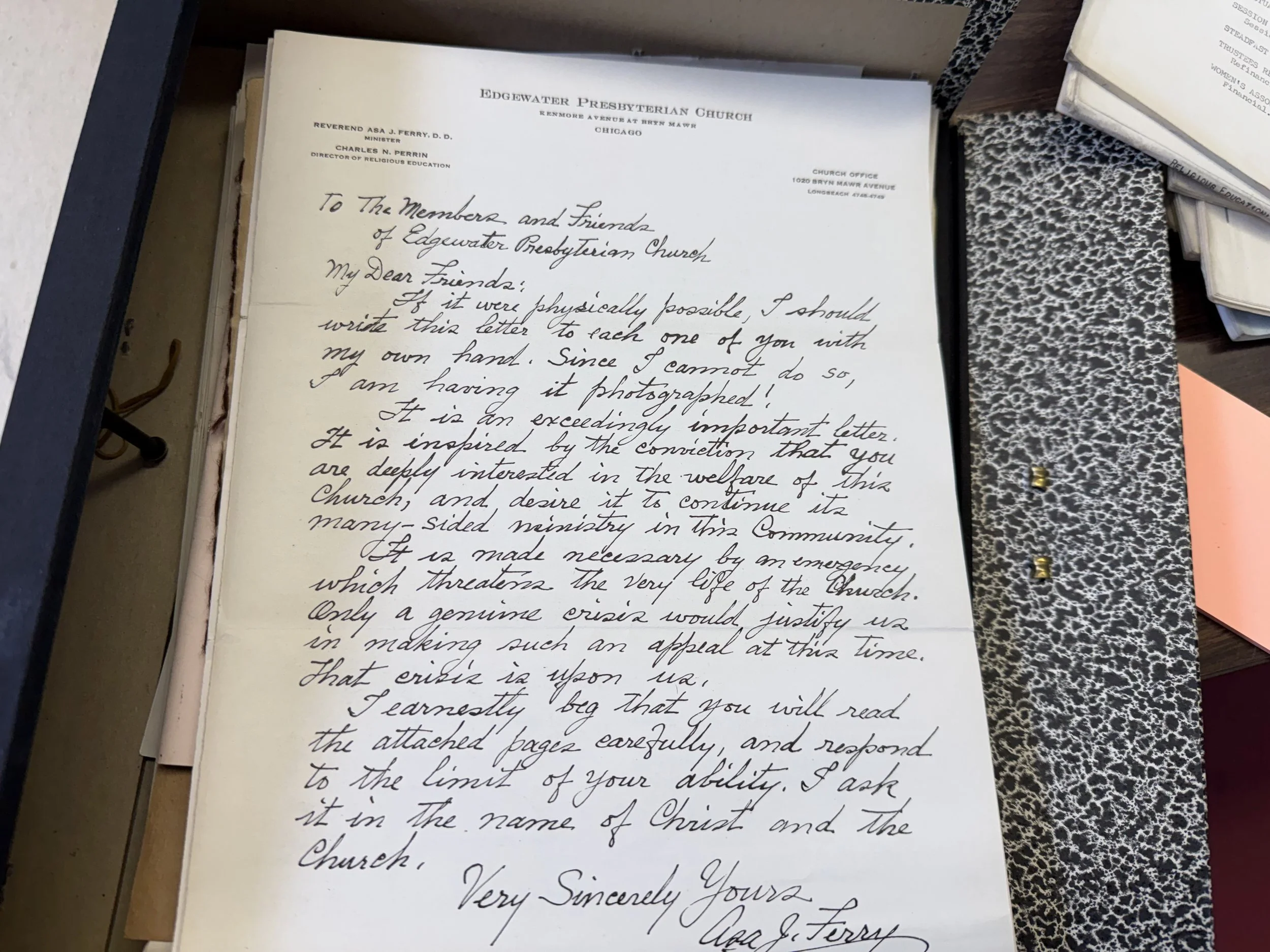
Photo: Gerald Farinas.
Every now and then, a visitor walks into my archiving office and one of the first things they ask is about the special paper and boxes I keep using to file documents or even wrap ledgers.
When organizing a backlog of records, it might seem tempting to head to a local office supply retailer for standard manila folders, ordinary corrugated boxes, and conventional tissue wrap. To a casual observer, paper is paper and cardboard is cardboard. To a professional archivist, however, standard office supplies are ticking time bombs for historic collections.
Preserving centuries-old documents like the ones I’m working with at Edgewater Presbyterian Church, vintage photographs, and fragile physical artifacts requires specialized storage materials. Professional archivists invest in certified archival folders, boxes, and wrapping papers because these products actively prevent the physical and chemical decay that ordinary containers accelerate.
The hidden threat of acid and lignin
The greatest enemy of historic paper is acid. Most modern commercial paper products are manufactured from wood pulp that contains lignin, a naturally occurring organic polymer that gives trees their rigid structure.
Over time, lignin breaks down and releases acidic compounds. This process causes ordinary paper to turn yellow, dry out, and crumble. Worse, acidity does not stay confined to the container. Through a process known as acid migration, volatile acids from a standard cardboard box or cheap folder bleed directly into the historical letters, baptismal registers, or property deeds resting inside.
Archival-quality manila folders and boxes are acid-free and lignin-free. They are manufactured from purified wood pulp or cotton rag fibers to ensure a neutral or slightly alkaline pH. Many archival folders also contain a chemical buffer, usually calcium carbonate, that acts as a built-in shield to neutralize acidic pollutants in the ambient air over decades of storage.
Controlling the microclimate
Proper preservation is not just about keeping dust off an object. It is about creating a stable microenvironment.
Standard grocery boxes and standard packing boxes are held together with acidic glues, animal pastes, or staples that rust and leave stains. Conventional boxes also absorb and hold atmospheric moisture, creating humid conditions that attract pests and encourage mold growth.
Archival document boxes, such as Hollinger or flip-top document cases, are designed specifically for conservation:
Structural integrity: Heavy-duty, acid-free barrier board resists crushing and provides physical protection from light exposure.
Metal edges: High-quality archival boxes feature metal-reinforced corners instead of chemical adhesives, eliminating harmful off-gassing and adhesive failure.
Fire and water resistance: The dense, specialized board used in archival containers slows heat transfer and provides an initial barrier against accidental water leaks.
The art of interleaving and wrapping
Fragile textiles, rare bindings, leather-bound council minutes, and antique photographs require a gentle touch. Standard wrapping papers, newsprint, and colored gift wrap contain harsh dyes, sulfur, and acidic wood fibers that permanently stain sensitive surfaces.
Archivists rely on unbuffered or buffered acid-free tissue paper, archival wrapping paper, and polyester sleeves.
Buffered tissue is ideal for cellulose-based materials like historic manuscripts and cotton textiles, providing continuous protection against environmental acids. Conversely, unbuffered tissue is essential for protein-based artifacts, including silk, wool, and animal leather, which can react poorly to alkaline buffers.
Using archival wrapping papers allows an archivist to interleave fragile items, cushion brittle binding spines, and prevent silver-gelatin photographic prints from scratching or adhering to neighboring documents.
Protecting history for the next century
Archival supplies carry a higher initial price tag than standard office stationery, but archivists know that prevention is infinitely cheaper than conservation. Once paper fibers acidify, shatter, or undergo chemical scorching, restoring them requires painstaking, expensive laboratory intervention.
Investing in genuine archival folders, boxes, and wrapping papers ensures that history does not quietly erase itself in the dark. It guarantees that the stories, decisions, and milestones recorded on delicate paper will remain intact, legible, and ready to inspire generations to come.