
Margaret Mead: The anthropologist who inspired my moral compass
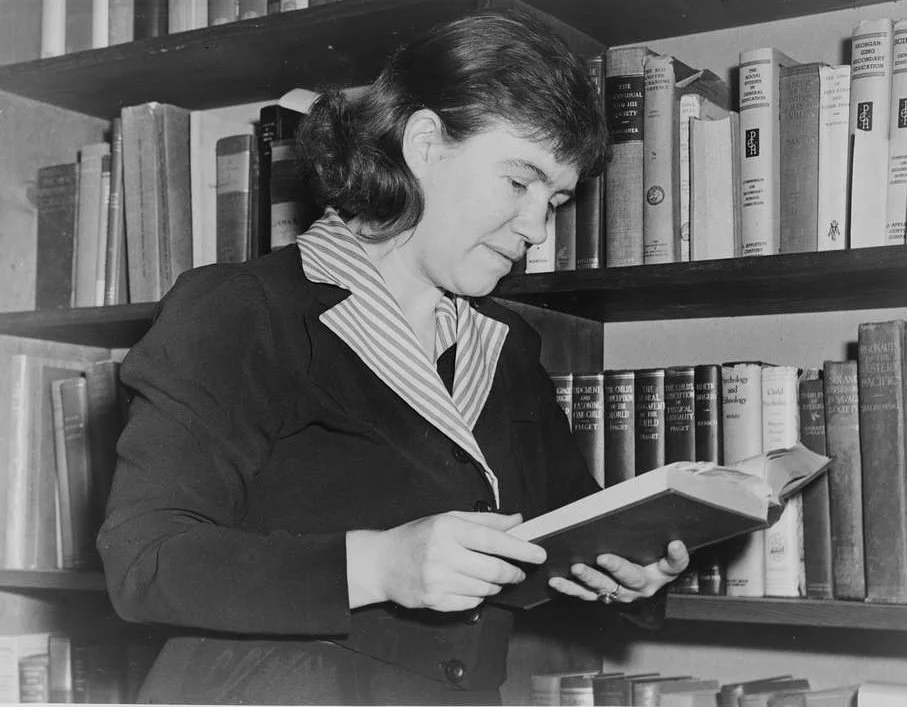
Margaret Mead. Photo: Public domain.
It is a small, but deeply felt, annual moment of recognition when I remember it is Margaret Mead's birthday each December 16.
The memory takes me straight back to my Cultural Anthropology 101 class at Loyola, where Mead's work first opened my eyes to the profound truth that human behavior is shaped by culture, not just by biology. She quickly became one of my intellectual heroes, and her core lessons are now the lenses through which I engage with the world.
For twenty years, I have relied on this perspective in my professional life. In fact, if a colleague like Andy or Becky had concerns about how someone reacted to something they said or did, or something that happened in the course of our work, they would often stop and answer for themselves, "Don’t say it. You’re going to tell me it’s cultural."
That simple phrase they noticed I use a lot, "It's cultural,” is the cornerstone of my work, guiding my advocacy for immigrants, or writing about the LGBTQ community, or leading people in the Presbyterian Church (USA).
Mead's greatest gift was showing us that what we often assume is "natural" or "universal" is merely "cultural." Her groundbreaking studies, which compared adolescence in Samoa with the tumultuous experience in the West, forced a realization: the stress and turmoil we often associate with growing up are not fixed biological facts, but are products of specific social and cultural expectations.
This idea, that cultural environment dictates personality, social roles, and even emotional life, is the foundation of my professional approach.
When I advocate for immigrant communities, this anthropological lens is indispensable. I find myself constantly combating ethnocentrism, the tendency to judge another culture by the standards of one’s own.
Mead taught me to pause and recognize that behaviors, familial expectations, or approaches to authority that may seem unusual through an American lens, or my unique Asian-born Hawaii lens, are often perfectly rational and functional within their own cultural logic.
I don't just help immigrant families navigate new systems; I translate the cultural intent behind their actions, articulating to leaders or community groups that the challenge is a clash of cultural logics, not a personal flaw or deficiency.
Her work is a constant reminder that ethical advocacy must first seek to understand the whole person within their original context.
This perspective is even more critical and central to my work in LGBTQ advocacy and storytelling.
Opponents of inclusion frequently rely on arguments of what is "natural" or "normal," attempting to label queer and transgender identities as deviations from a fixed biological order.
Mead’s studies, particularly her explorations of diverse gender roles in New Guinea, provide the necessary intellectual framework to dismantle this idea. She showed that what one society assigns as strictly "masculine," another assigns as "feminine," proving conclusively that gender roles are cultural constructions, not biological destiny.
In my storytelling, I use this framework to move the conversation past mere tolerance and toward genuine acceptance. I don't just present the personal challenges faced by LGBTQ individuals; I frame these challenges as evidence of a cultural failure, a failure of society to accommodate the natural, beautiful spectrum of human identity.
By channeling Mead, I seek to turn the spotlight back onto the listener's unexamined assumptions. My goal is to use narrative to trigger the same self-awareness Mead sparked in her American audience. To make them ask, "Why do I assume this is the only way to be?"
By revealing that our rigid definitions of gender and love are merely local habits, I empower a story of inherent dignity and plurality, pushing for a more compassionate and equitable cultural environment for everyone.
Margaret Mead’s legacy is not just about remote fieldwork; it is about providing a toolkit for cultural literacy right here at home. She gave those of us in advocacy, community development, and public-facing work the profound ability to question the assumed universal truth, ensuring that our work is rooted in empathy, understanding, and the relentless pursuit of social justice.